Brooke Bond
The University of Western Australia, Indian Ocean Marine Research Centre | Web Developer (Marine Spatial Ecology)
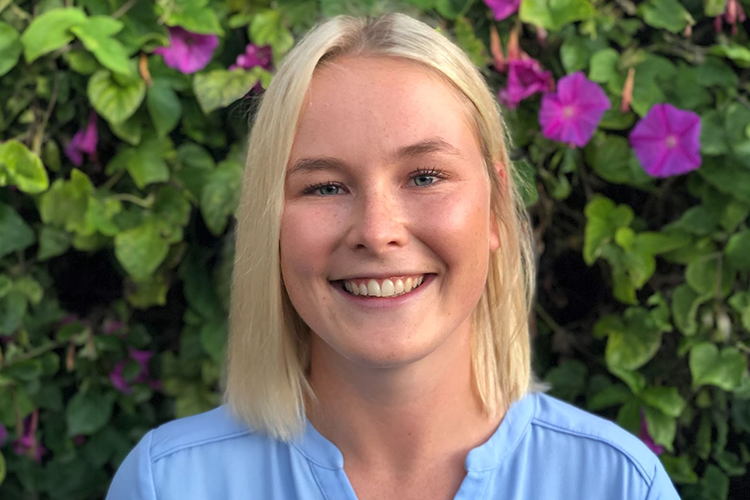
Brooke Gibbons is a web developer at the University of Western Australia, based in the UWA Oceans Institute and School of Biological Sciences. She develops R-based tools and Shiny apps used by research and state government organisations to collect, quality-control and visualise ecological data. She developed CheckEM to help researchers identify common issues in imagery-based fish survey metadata and annotations before downstream analysis. Brooke is particularly interested in open-source software and improving the consistency, transparency, and reproducibility of marine ecological data workflows.
Abstract
CheckEM: an open-source toolkit for standardising, cleaning, and visualising fish survey data
Effective research and monitoring depend on accurate, interoperable, and reproducible data, yet quality-control issues are often only discovered late in the analysis workflow. Fish surveys using stereo- and mono-video provide a useful example: these methods generate large volumes of metadata and annotation data, often produced across different projects, organisations, and software platforms. A national synthesis of video-based fish survey datasets identified numerous inconsistencies and errors in data collection and annotation, highlighting the need for systematic and reusable quality-assurance workflows.
We developed CheckEM, an open-source R package and Shiny application for standardising, cleaning, validating and visualising fish survey data. CheckEM combines rule-based validation with external reference data to identify potential errors in survey metadata and biological annotations. Checks include taxonomic validation, expected spatial distributions, outdated scientific names and, for stereo-video data, biologically implausible body-size measurements. The toolkit supports outputs from multiple annotation software platforms, helping researchers bring heterogeneous datasets into a consistent workflow.
The Shiny application provides a user-friendly interface for running checks and exploring results through interactive tables, maps, and visualisations, while the R package enables the same processes to be incorporated into scripted, reproducible data pipelines. Users can download cleaned datasets, summary outputs, and detailed error reports, allowing issues to be corrected iteratively and checks to be rerun as datasets evolve.
By bringing quality-control steps into an open-source R workflow, CheckEM improves data accuracy, transparency, interoperability, and reusability. Although developed for imagery-based fish surveys, the approach demonstrates how domain-specific validation rules, external reference datasets and interactive R tools can be combined to make quality assurance more accessible and reproducible across research workflows and help to build a collaborative research community.