Claire Davies
CSIRO | Senior experimental scientist
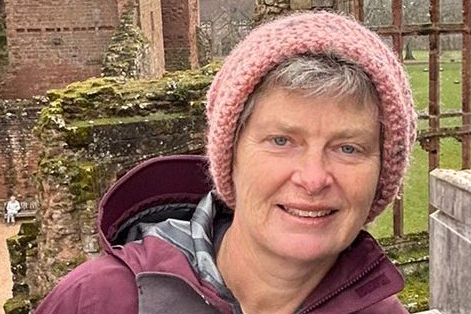
Claire Davies has expertise spanning plankton taxonomy, ecology, data science, and marine biological observing. She Co-Leads the Phytoplankton Biomass & Biodiversity Essential Ocean Variable (EOV) for the GOOS BioEco Panel and plays a leading role in Australia's national biological observing system. Claire is Chair of the Integrated Marine Observing System (IMOS) Biogeochemical Steering Committee, Project Lead for IMOS National Reference Station BGC Sampling, and co-developer of the IMOS Biological Ocean Observer. She has been instrumental in advancing the visibility, accessibility, and application of biological observing data, strengthening the delivery of EOVs and their integration into major scientific assessments, including State of the Environment reporting.
Abstract
Observations to Impact – The power of R-Shiny
The Biological Ocean Observer was developed to bridge the gap between observations and impact. Despite multi variable, long-term time series datasets being openly accessible, uptake was slow. I found myself repeatedly downloading, wrangling and analysing data to make similar products for stakeholders. People were overwhelmed by the data portal, didn’t possess the technical skills, or simply didn’t have the time to develop their own workflows. Then we discovered R Shiny.
The Biological Ocean Observer is an online R-Shiny application that integrates, analyses and visualises data from the Integrated Marine Observing System (IMOS) so that everyone can understand, query and interpret it. We use internationally recognised programming frameworks (R and Shiny), and all code are freely available, facilitating further development and collaboration within the community. The Shiny application is underpinned by an R-package (planktonr) - this is the engine, performing the heavy wrangling prior to visualisation which improves app performance. planktonr also allows power users to replicate the data and visualisations they access from the Biological Ocean Observer and to modify it for their specific use case.
The Biological Ocean Observer is designed to be used by a wide range of stakeholders including science researchers, natural resource managers, policy makers, educators, students and the general public – including you! It increases our ability to deliver impact by expanding the analysis and visualisation of IMOS data to a broad audience, accelerating the generation of scientific insights. Publication ready plots can be uploaded directly into policy documentation, for example, State of Environment.
The Biological Ocean Observer and planktonr provide a pipeline from observations to impact and make IMOS data discoverable by all.