Promoting responsible fishing practices to support conservation efforts
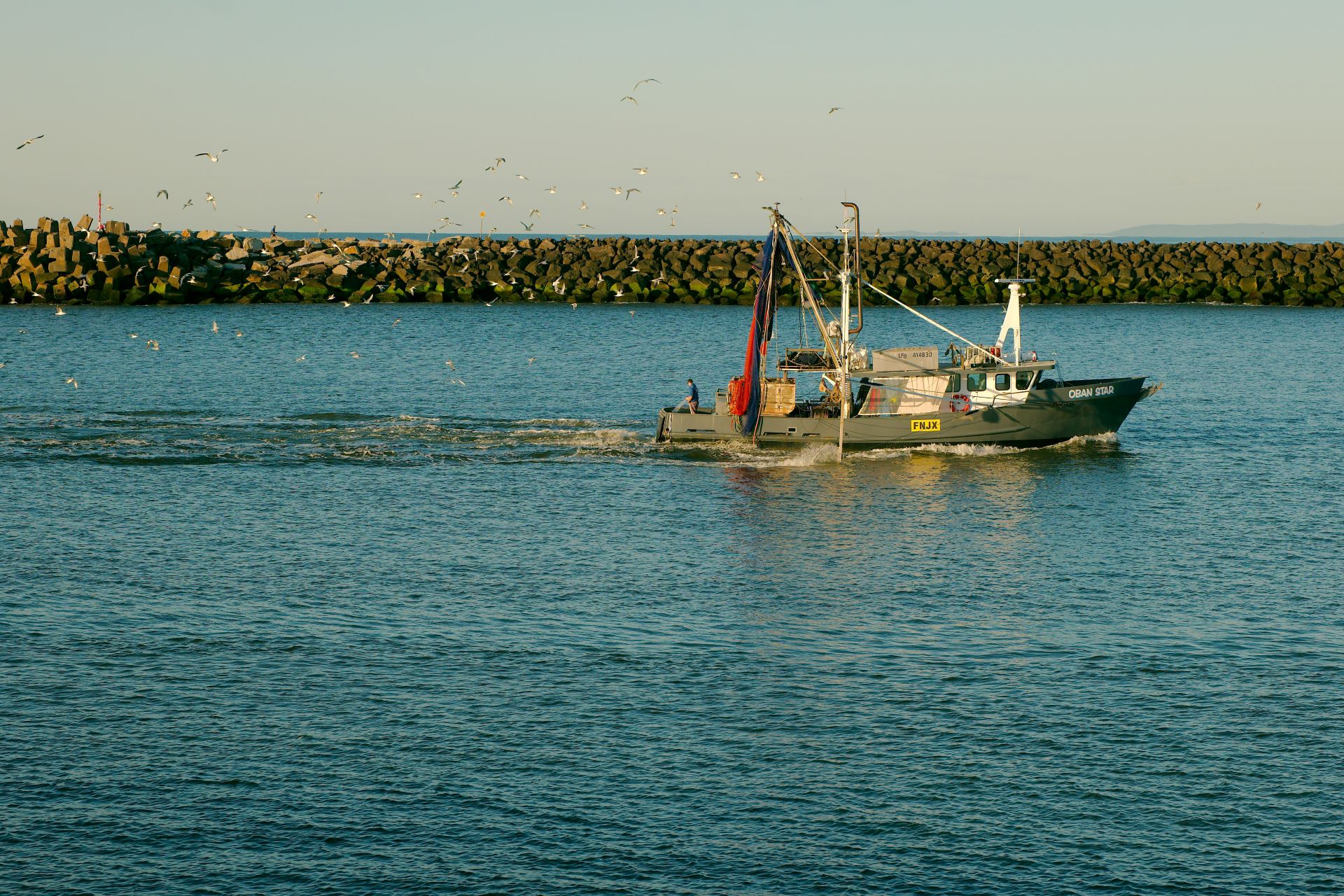
Fishing gear used by commercial vessels poses one of the biggest threats to seabirds, as they can be injured, captured or killed by it.
The Seabirds Dashboard supports self-assessment against recommended practices and verification requirements implemented by relevant authorities. The promotion of seabird-safe fishing practices reduces the risk to wildlife and supports conservation efforts.
Practical insights to protect wildlife
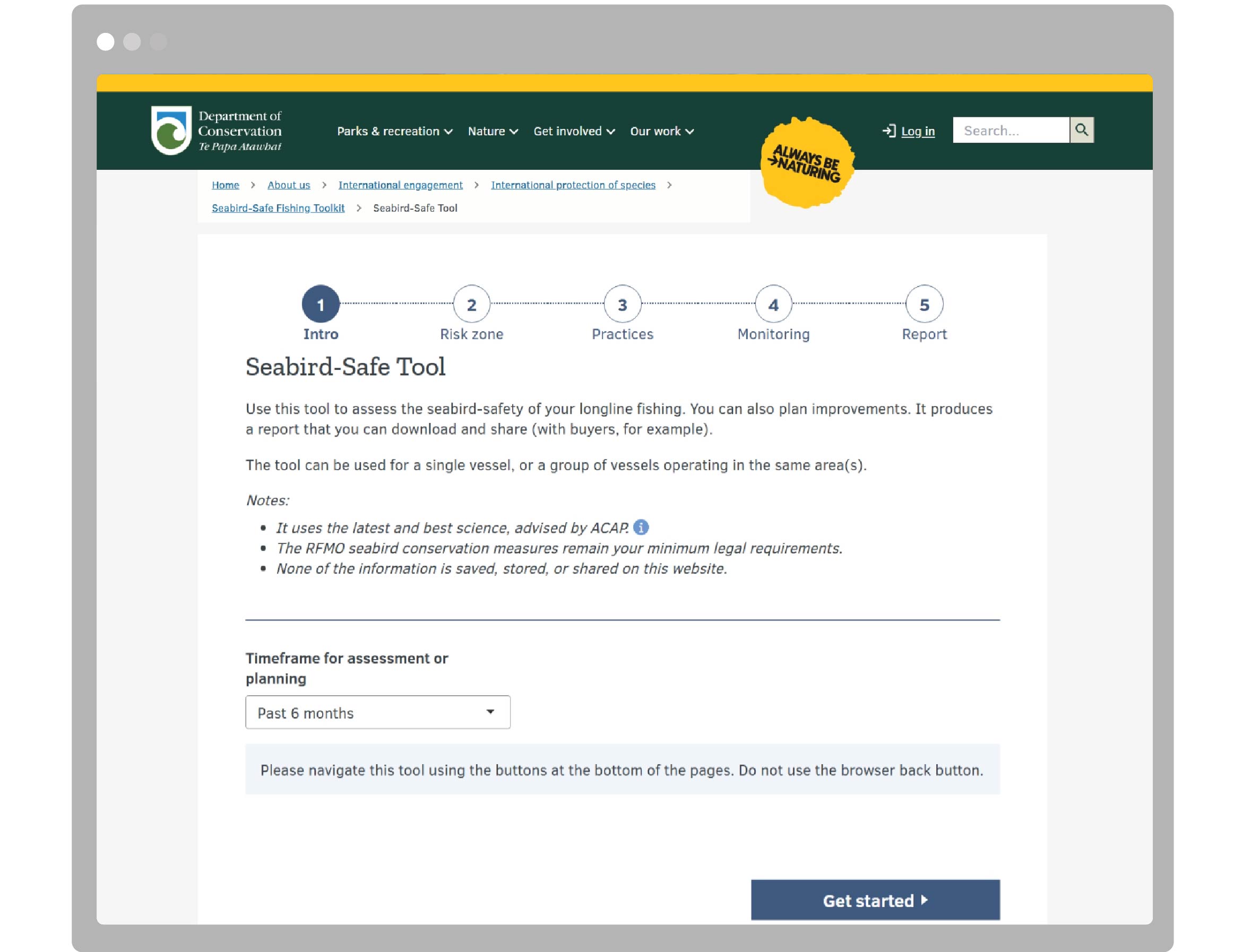
The Seabirds Dashboard integrates key information on risk zones, prevention strategies and verification methods used to reduce seabird bycatch.
This unified resource allows users to easily determine the effectiveness of current verifications and practices. Calculated metrices can be shared alongside tailored solutions to improve fishing practices
Measuring performance
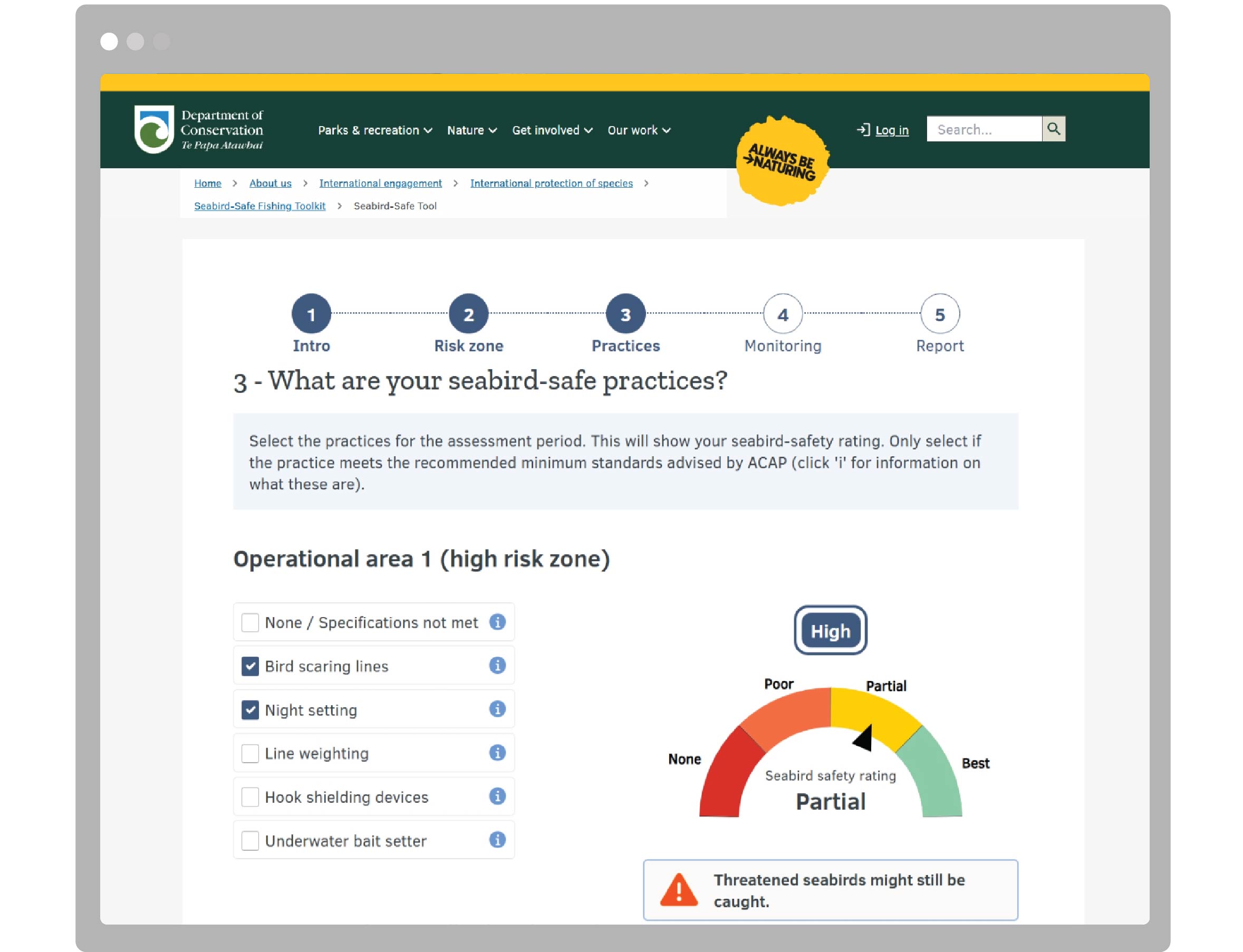
Customised data visualisations are used to communicate the effectiveness of current practices and verifications. For example, animated gauge plots display the effectiveness of current measures. An overall score is calculated, providing users with a measure of performance that can be tracked over time.
Pushing technology to generate accurate insights
The risk zone map was developed using a new R package created by our team. The package enables users to draw their fishing areas directly onto the map. This customisation makes it easy to precisely define fishing practices and ensure results generated are highly accurate. Quarto, a unified authoring framework for data science, was our tool of choice to build functionality that allow users to instantaneously generate PDF reports based on the results of their self-assessment.
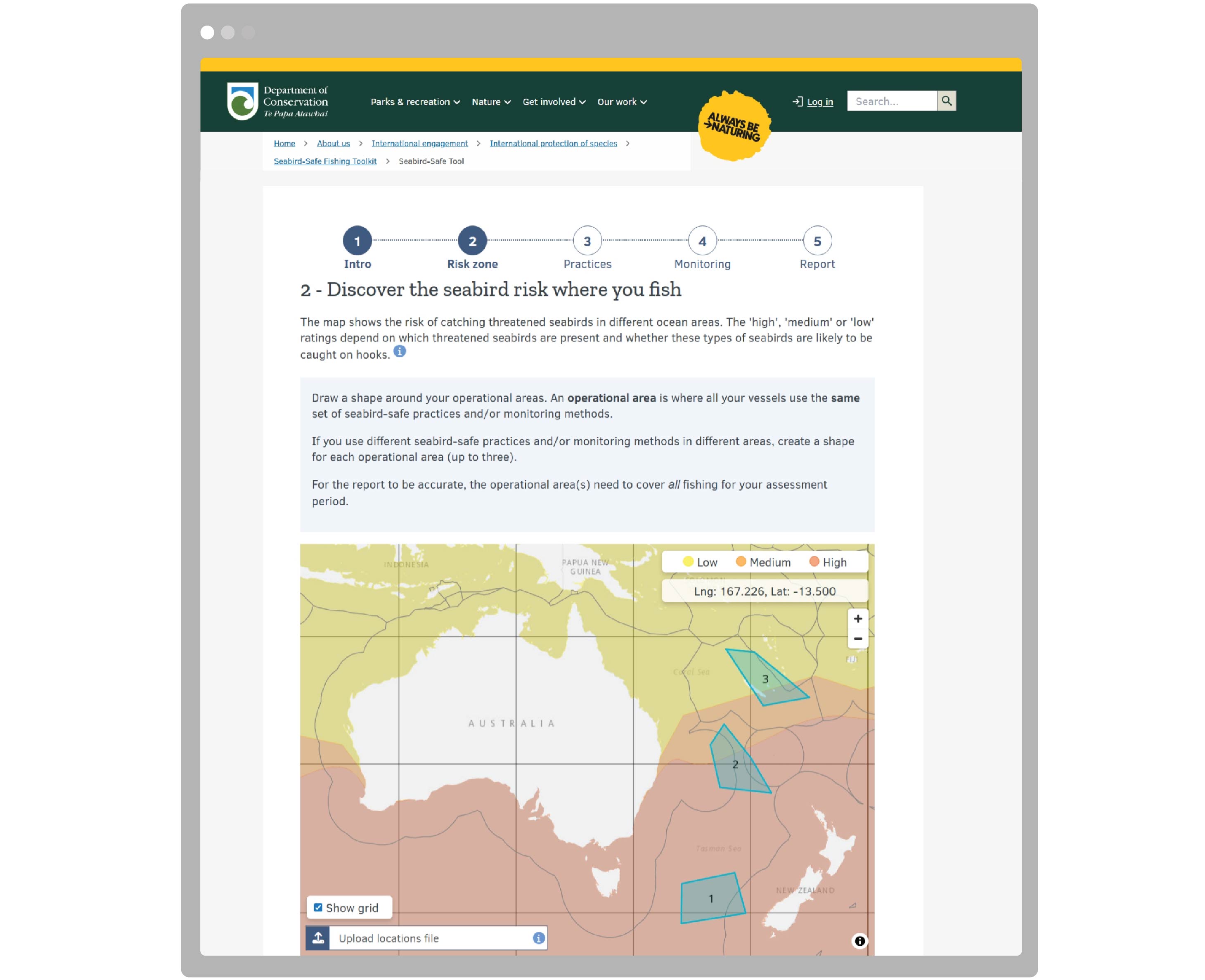
Informing strategic improvements in fisheries
By linking risk zones, practices and verification into one central assessment tool users can quickly gather what improvements will likely result in the biggest impact. Assessments can easily be downloaded in a user-friendly document, making it easy to disseminate results.
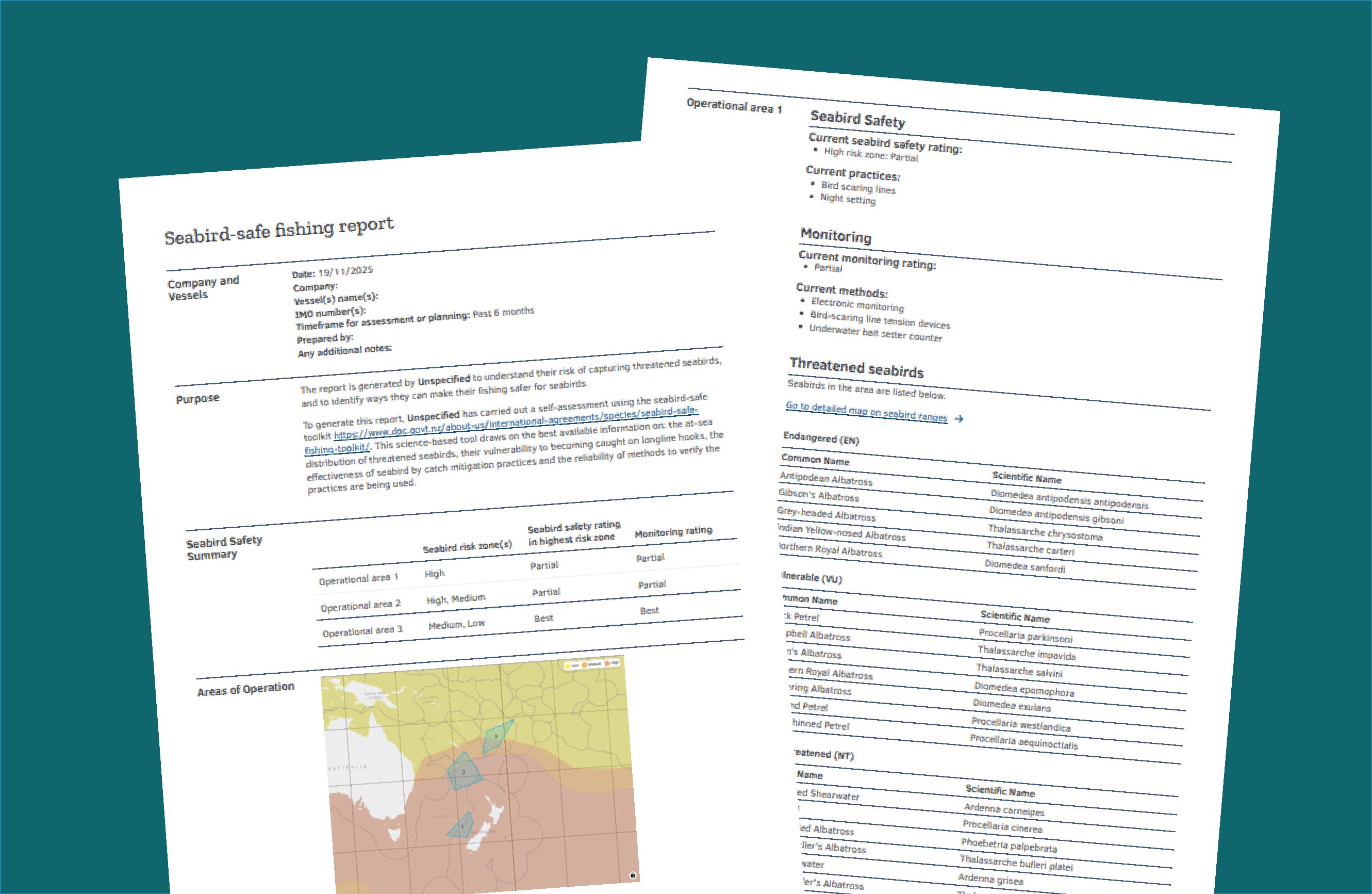
Seamless integration
While the tool is hosted and maintained by Epi, we integrated the user interface into the Department of Conservation’s website as an iFrame, rather than making it accessible through a separate weblink. Presenting the dashboard alongside the Department’s existing tools and resources was important to ensure stakeholder can access the tool as part of diverse set of resources presented alongside each other.
Delivered across language barriers
The dashboard is available in 4 different languages – English, Japanese and simplified and traditional Chinese. Making the application more accessible and improving understanding of seabird safe practices across a wide geographic area.