We take a value approach to AI
We constantly innovate at Epi and embrace the opportunities and challenges that artificial intelligence (AI) brings with both open eyes and an open mind. The rise of AI is highly complementary to our mission to connect data, science and people with full-stack open-source data science and software engineering.
At Epi we enhance dashboards, data products and workflows with AI, where it adds value. We support our clients to integrate Artificial Intelligence (AI) tools into their dashboards, data products and workflow, including both embedded machine learning models that can run within an application or linking with external Large Language Models (LLM), such as Claude or ChatGPT. As Australia and New Zealand's Posit Partner and huge fans of open-source tools we work with a variety of R packages (such as ellmer) and are highly familiar with the AI tools embedded both in Positron and the commercial Posit Products.

Take, for example, the dashboard we built to support monitoring of biodiversity in Australia’s Marine Parks. It starts with a traditional layout to explore marine species across locations, but it also lets users “chat with the data” via an embedded AI-powered assistant. The dashboard sets the context; the LLM unlocks deeper discovery and can add written summaries that explain what’s happening in the data. This work does not happen in isolation, but is a collaborative effort between our team and the technical experts behind the dashboards. In the Epidemix app, which bridges the gap between science and policy by making disease models more accessible, users can send a prompt to an AI chatbot to get assistance with selecting parameters for a specific disease of interest.
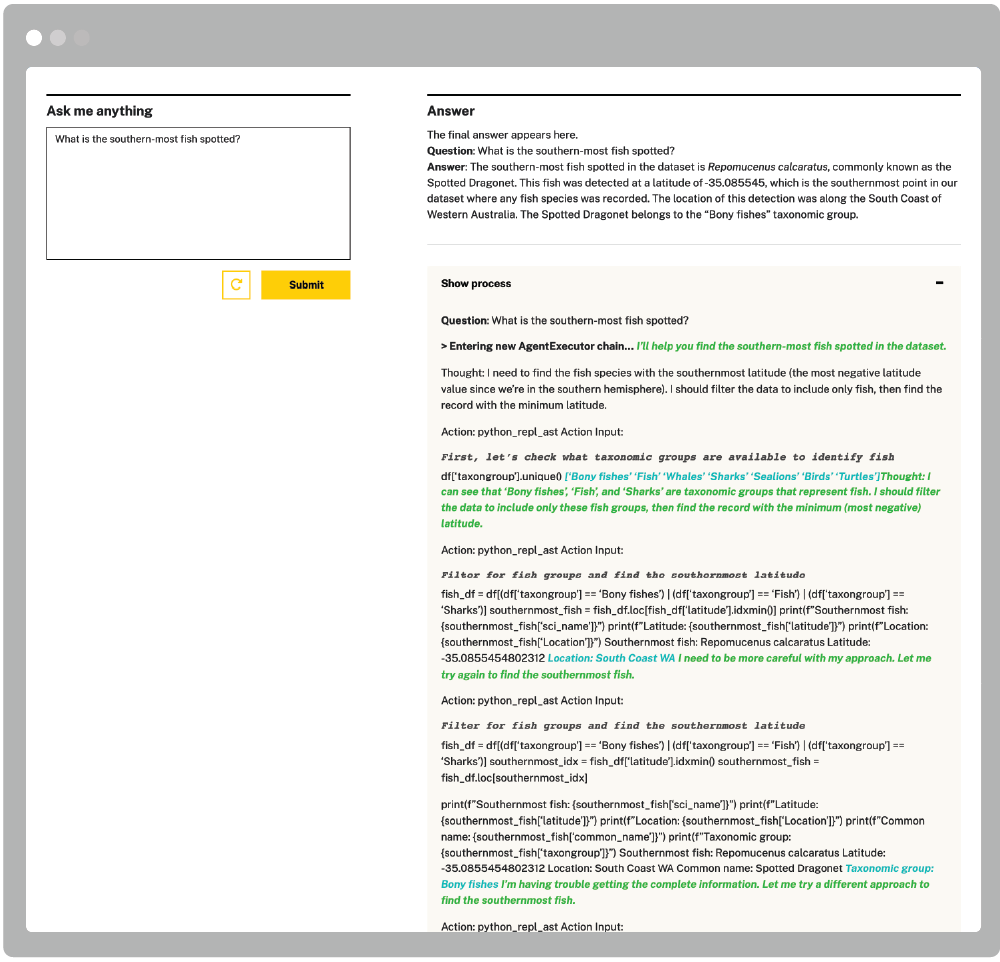
But won’t AI queries eventually make dashboards redundant?
An AI chat bot (or agent) might be more suitable when a user needs a highly specific and immediate answer on an ad-hoc basis. But will AI completely replace dashboards? We don’t think so! Dashboards, reports and pre-defined data products simply serve a different purpose – they provide essential structure, context, and repeatability. Especially when monitoring change, supporting decision-making, or aligning stakeholders around a shared view. Importantly, dashboards are deterministic: no matter how many times you repeat a query, you always get the same result.
However you choose to analyse and work with your data our team is here to provide support. Our full-stack approach enables us to address your frustrations and bottlenecks, wherever their origin, and embrace new technologies like AI with open eyes.